Blackberry plants are perennials, so they’ll produce year after year, and they’re very reliable. The fruit grows on canes, and these plants grow more like shrubs than trees, which makes them easy to squeeze into smaller spaces. And unlike with fruit trees, you can actually get a harvest in just the 2nd year!
Let’s look at everything you need to know to grow your own blackberries at home.

QUICK GUIDE TO GROWING BLACKBERRIES
- Life Cycle: Hardy perennials
- Sun: Full sun
- Soil: Acidic, well-draining; can thrive in poor, rocky soil
- Grow in: Ground or low raised beds
- Most important tending tasks: Pruning and trellising in spring and fall
- Harvest: After planting year, harvest every summer; sometimes 2nd harvest in fall
HOW BLACKBERRIES GROW
Blackberries, alongside raspberries, are in the caneberry group, which means they produce fruit on long, woody stems called canes. The plants themselves are perennials (meaning they return year after year from the roots), but canes are typically biennial. Here’s what that looks like:
- 1st Year of Cane Growth (Primocane): While the plant focuses on growing strong roots and canes, it won’t bother fruiting or flowering (for most cultivars).
- 2nd Year of Cane Growth (Floricane): Last year’s canes are now “old wood” that flower and fruit and then die. The plant sends out new canes to replace those that die.
- After the planting year, plants will contain both primocanes and floricanes at the same time.
Blackberry plants can live between 15 to 40 years, depending on many different factors.
Blackberry plants have shallow roots, which makes them easy to pull up (and replant). They can spread underground by sending out these horizontal runners called suckers. That’s why you may see new shoots popping up several feet away from the main plant.
UNDERSTANDING BLACKBERRY CHILL HOURS
One of the most overlooked factors when growing blackberries is chill hours. Blackberry plants need a certain amount of winter cold to break dormancy and produce healthy growth, flowers, and fruit the following season.
Chill hours are the number of hours a plant experiences temperatures between approximately 32°F and 45°F during the winter months. Different blackberry varieties require different amounts of winter chilling.
Most blackberry varieties need anywhere from 200 to 900 chill hours. If a variety doesn’t receive enough chill hours, you may notice poor flowering, reduced fruit production, delayed leaf growth, or uneven ripening.
When choosing blackberry plants, it’s important to select a variety that matches your local climate. Gardeners in warmer regions, such as Central Texas, should look for low-chill varieties that require fewer than 400 chill hours. Gardeners in colder climates can successfully grow both low-chill and high-chill varieties.
- Prime-Ark Freedom
- Prime-Ark Traveler
- Rosborough
- Kiowa
- Brazos
Before purchasing plants, check the chill hour requirements listed by the nursery to ensure the variety is well-suited to your growing zone. At Stark Bros, you can enter your zipcode and they will tell you exactly what fruiting plants will do well in your area.
TYPES OF BLACKBERRY PLANTS
There are 3 main blackberry plant varieties. You’ll need to know the type you’re growing so you can prune and trellis accordingly.
Erect Blackberries
This type has canes that stand erect, meaning they don’t require support from trellising. That being said, they still benefit from some type of trellising for easy maintenance and harvesting.
You can find thorny and thornless erect varieties. The thorns on the thorny kind are… thorny, like rip-through-your-jeans thorny, so beware.
Berries from erect plants have a milder flavor and larger seeds. Plants are winter hardy.

Semi-Erect Blackberries
This type features vigorous thornless canes that grow upward before arching down the ground. Since these canes can grow 7 feet or more, they benefit from a sturdy trellis to support them and hold them off the ground.
The fruit from semi-erect types is usually large and sweet.
Trailing Thornless Blackberries
This type also doesn’t have thorns, and it definitely requires trellising to hold the long canes off the ground (canes can grow more than 15 feet long!). Cultivars in this group include the popular marionberry and the raspberry-blackberry hybrids called boysenberry and loganberry.
Trailing blackberries have the earliest fruiting season and produce fruit with small seeds and wonderful flavor, perfect for eating fresh or making jams.
Unfortunately, this type is the least cold hardy or heat tolerant.
When you’re selecting a type for your garden, keep these considerations in mind:
- Erect types often handle extreme cold better than trailing types.
- Do a little research to find a variety that grows best in your climate. Even berry cultivars within the same type (erect, trailing) differ greatly in fruit flavor, tolerance to cold, and plant longevity.
- Summer-bearing types are ready to harvest as early as late May or June, while others are most productive in late summer. Everbearing varieties put on a second show in the fall. If you have space to grow 3 or 4 different vines, you could buy different types in order to stagger your harvest times. Successive harvest windows mean you could be picking ripe berries from mid-spring to fall.

PLANTING
When to Plant Blackberries
The best time to plant blackberries is in the early spring, when the canes are still dormant from winter. You can go ahead and plant as soon as you can work the soil.
In warmer regions, you could plant in the late fall if you missed your spring planting window.
Choosing and Preparing a Planting Site
Blackberry plants are super tolerant of their soil, so they don’t need to be planted in raised beds or large containers. Some of my garden design clients prefer to keep edible plants separate from the rest of their landscape, so we opt for low raised beds (just 6 inches tall).
For the best berry yields, choose a location that receives full sun. Thanks to their shallow roots, you can tuck these plants up against a house foundation or fence if it’s nice and sunny there.
Remember, pick a location that can host these plants for decades to come.
The Ideal Blackberry Growing Site will have:
- Full sun exposure
- Well-draining soil (sandy loam ideal)
- Shelter from rough winds
- Few weeds
Soil
Blackberries will grow in dry, sandy soil and even poor clay soil, but they’ll be most productive in sandy loam. You can amend native soil by digging down about 12 inches and working in coarse sand (to improve drainage) and compost or well-aged manure (to improve moisture retention and fertility).
Since blackberries also prefer more acidic soil, consider adding an acidic-based fertilizer to lower the pH of your soil down to 5.6 to 6.5. Soil that’s out of range can be amended with lime (to raise pH) or sulfur (to lower), as needed.
Starting Plants
It’s easiest (and much faster) to start with canes or plants from a reputable local nursery or online seller, rather than trying to grow blackberries from seed. Nurseries sell bare-root plants (which are basically just the canes with roots attached) and potted plants (these will look more like plants you’re used to buying).
Pro Tip: If you’re buying from an online seller, order well in advance of spring planting. Popular cultivars sell out fast.
Can You Grow New Plants from Wild Blackberry Canes?
Most experts advise against digging up canes from nature or even from your neighbors. These plants could be weird hybrids or extra susceptible to disease. Sourcing plants from reliable plant sellers means you know the exact varieties and characteristics. You’re more likely to end up with the most delicious fruits possible.
How to Plant Blackberries
Before planting, make sure the space is clear of any grass and weeds that might compete with the shallow roots of blackberries.
Plant trailing types 3 to 5 feet apart along your support structure, and erect types 6 feet apart; keep rows 10 feet apart.
Bare-Root Plants
- Dig a hole deep enough to accommodate the roots plus 1 to 2 inches of cane below the soil line (determine root length by holding the cane section in your hand).
- Fill in the planting hole while holding the cane section upright.
- Cut the canes back to 6 inches if they’re longer.
- Water thoroughly. Continue watering frequently to ensure roots don’t dry out.
Potted Plants
- Dig a hole wide enough to accommodate the root ball and deep enough so that the top of the root ball will be 1 inch below the soil line.
- Gently pull the root ball from the pot and then use gloved hands to loosen some of the exterior roots.
- Set the root ball in the soil and fill the planting hole with soil. Firm the soil to remove excess air pockets.
- Water thoroughly. Continue watering frequently to ensure roots don’t dry out.
GROWING
Mulching
While I’m not a fan of using mulch in raised beds, it has several benefits for in-ground beds growing perennials like blackberries. A 3- to 4-inch-thick layer of mulch can:
- Help control weeds
- Maintain soil moisture
- Provide additional nutrients as it breaks down over time
The best type of mulch is an organic mulch like wood chips. I don’t recommend straw as mulch for blackberries since it can attract voles and other rodents that might damage your plants.
Be careful to leave the space just around the crown of each plant free of mulch to prevent rot. (The exception is in the winter, when mulch around the crown can protect plants from extreme cold.)
Watering
Blackberries need regular moisture from rainfall or irrigation, especially in the weeks after planting (remember those shallow roots) and then again when they’re flowering and fruiting. Aim to deliver about 1 inch of water a week, more in hot weather, to enjoy the best berry quality and yield.
Since these plants are growing in the ground, your goal with irrigation is to soak the root zone without accumulating standing water. Then, don’t allow the soil to fully dry out between waterings.
I highly recommend installing a simple drip irrigation system or soaker hose down both sides of your blackberry row, placing the lines about 6 inches away from the base of the plants. These lines water efficiently, right where the plants need it most. They also prevent disease caused by overhead watering wetting the leaves.
Wear Proper Protection When Caring for Your Blackberry Plants
I recommend wearing long sleeves and gloves with rubber palms when you’re working with your plants, especially thorny varieties. It’s also a good idea to wear closed-toe shoes and long pants in case you encounter any little critters (like mice or snakes) that are hanging out near your vines.
Fertilizing
Blackberries benefit from fertilizing twice a year, once in the spring, just as the buds are emerging, and again in the fall. I recommend an organic all purpose fertilizer. There are plenty of granular and liquid options. (You may need to fertilize more frequently with liquid fertilizers; follow the instructions on the bottle.)
The most important nutrient for your plants is nitrogen (N in the NPK ratio on fertilizer products).
You’ll know your plants have sufficient nutrients if their leaves are nice and dark green. Pale green or yellow leaves are a sign your plants are struggling from not enough nutrients, pests, or disease.


Pruning
It may sound counterintuitive, but you want to prune any little blackberry flowers the first year so that your plants don’t produce fruit. That gives them time to establish their roots and send up more canes for next year.
Besides pruning the flowers that first year, your plants need regular pruning. Don’t be intimidated by the amount of information you can find on how to prune blackberries. The idea is just to remove old canes (the ones that already bore fruit) so that the new canes can take their place.
While some gardeners recommend marking those branches that have produced fruit so you know which ones to prune at the end of the season, it should be easy enough to tell the difference between aging brown floricanes that are dying off and green primocanes.
Make sure to use sharp, clean pruners. Avoid pulling on dead canes to remove them, or you risk yanking the entire plant out of the ground on accident.

Erect Blackberries
These short, stiff canes need pruning in the summer and the winter. You’ll see new canes popping up from the crown and buds on the roots (these are called suckers) each year so the plants can spread.
IN THE SUMMER:
- Remove the top 2 inches of new primocanes when they’re about 4 feet tall. This encourages those canes to branch out, which will increase next year’s harvest.
- Come back every couple of weeks to prune the tip of each cane once it reaches that height.
- Remove any canes (suckers) that are growing outside your little planting row if you don’t want your plants to spread.
IN THE WINTER:
- Remove all the dead floricanes (old canes that have already fruited).
- Shorten any lateral branches to just about 2 feet long.
If you have an everbearing blackberry that produces a second crop in the fall on primocanes, then cut all the canes to the ground in late winter. In the summer, remove the top 6 inches of the primocanes once they’ve reached 3 to 4 feet tall to encourage them to branch before producing in the fall.
Semi-Erect Blackberries
This type is also best pruned in the summer and winter.
IN THE SUMMER:
- Remove the top 2 inches of new primocanes when they’re about 5 feet tall. This encourages those canes to branch out, which will increase next year’s harvest.
- Come back every couple of weeks to prune the tip of each cane once it reaches that height.
IN THE WINTER:
- Remove all the dead floricanes (old canes that have already fruited).
- Spread the primocanes out along the trellis structure. (They can be difficult to train.)
- Canes do not need to be shortened.
Trailing Blackberries
- Wait until the plants have been harvested and died back. Then remove the floricanes (old fruiting canes) by cutting them at ground level.
- In warm regions, train primocanes onto support structure by spiralling them around the wires. No pruning needed.
- In cold regions, leave the primocanes on the ground for winter and protect them with mulch. Wait until a warmer day in spring to train them up the wires.
TRELLISING
Unless you’re growing a dwarf blackberry, your plant will benefit from some type of trellis structure to support the canes, hold the fruit off the ground, and protect the plant from wind damage.
You can add your trellis structure before planting or during the first year.
Here’s what I recommend based on plant type:
Erect Blackberries
These plants do well on a simple T-trellis made from twine or 2mm/12-gauge wire strung in between wooden or metal end posts. Make sure your end posts are well anchored (I recommend digging down a bit and pouring some cement around the base).
Since your plants are spaced about 6 feet apart, space your posts about 6 to 7 feet apart.

Semi-Erect Blackberries
These plants are best supported by a double T-trellis, with 4-foot cross arms atop a 6-foot wooden post. Add another 3-foot cross arm about 2 feet below the top. By stringing 2mm wire on either side down the rows, you’ve got a nice little channel for the plants to climb.
Trailing Blackberries
Trailing plants do well with a simple 3-wire trellis system, with horizontal wires that are about 2, 4, and then 6 feet off the ground. You can use wood or metal posts at each end of the row. (Again, make sure these are really secure.)
After the first year, you can train new primocanes onto the row below the fruiting canes using twine to tie them. Try to direct all canes in one direction.

HARVESTING
When to Harvest Blackberries
If you’ve pruned the flowers the first year, then your first big harvest will come during the second year. Thanks to your diligent pruning and care, those canes are bursting with berries that will go from green and firm, to red, to purply-black and perfectly ripe. Woohoo!
A blackberry is ready to pick when it’s a deep black color but turning from shiny to dull. It should feel nice and plump. It will release easily from the plant when you give it a little tug.
Pro Tip: Unlike tomatoes, berries don’t continue ripening after they’ve been picked.
Once your plants are producing, you’ll need to come back every couple of days to pick more blackberries that have reached their final color. Ripe fruits rot pretty quick if left on the plant. (Also, dropped berries attract larger pests like mice, which can then bring in snakes. Great reason to stay on top of your harvest!)

How to Harvest Blackberries
To harvest, pull berries gently up or down to release them from the plant. Again, they should separate easily if they’re ready. Try not to disturb the rest of the cane to avoid knocking other ripe berries to the ground or tearing the plant.
If you’re used to harvesting raspberries, note that blackberries keep their central plug inside the fruit.
For the juiciest, sweetest fruit, harvest during the early morning hours once the dew has dried. Avoid picking fruit that’s wet from dew or rain since wet fruit will decay faster. Bring your berries inside to refrigerate, unwashed, as soon as possible.
Here’s how much you can expect to harvest from each type:
- Erect Blackberries: 18 to 28 pounds per 10-foot row
- Semi-Erect Blackberries: 25 to 35 pounds per plant
- Trailing Blackberries: 10-13 pounds per plant
How to Store Blackberries
Blackberries are best enjoyed within a couple of days of refrigeration. Wash your fruit just before eating. For longer-term storage, consider canning, dehydrating, freezing, or freeze drying your harvest.

How to Care for Your Plants in the Off-Season
As I mentioned in the Pruning section, cut back any canes that produced blackberries during the season. You don’t want your plants to waste energy trying to maintain old wood when they could put that energy toward growing new canes.
Keep the area around the crowns weed-free throughout the year.
Move any canes you wish to transplant in the fall.
In the spring, trellis the canes in a fan pattern or direct all growth in one direction to avoid tangling. Prune the tip of each cane to encourage branching.
If you have an old plant that’s producing fewer primocanes or small fruits, or a plant that’s suffering from heavy disease or pest issues, remove it in late summer or fall. Start fresh with a young, healthy plant.
TROUBLESHOOTING PESTS & GROWING PROBLEMS
Here are some potential issues to watch out for on and around your blackberries:
Birds
Birds love fresh berries as much as we do. The best way to protect your crop is to install a simple physical barrier to keep them away. Bird netting draped over your plants should do the trick. (Just know that this netting can become tangled in the canes and is then hard to remove at the end of the season.) I prefer insect netting instead because it is more tightly woven and it helps agains birds and other pests as well.
Without netting, you’ll have to stay on top of harvesting berries as soon as they’re ripe. Pop outside first thing in the morning every day.

Insect Pests
Creepy crawlies you may find eating your fruit before you get to include raspberry borers, fruit worms (aka fruit fly larvae), stinkbugs, and junebugs. In most cases, pests are just a nuisance that destroy some of your fruits, but you’ll still have more than enough for a good harvest. Make sure to harvest frequently since overripe fruit can attract pests great and small.
To deal with visible pests, put on a pair of gloves so you can remove them by hand and toss them into soapy water. Prune any wilting or dead canes you see during the growing season that could be housing borer larvae and toss them in the trash. Pruning canes again at the end of the season goes a long way in preventing major pest issues in the future.
As always, the healthier your plant is, the better it can fend for itself against pests.
Disease
Blackberries sometimes suffer from diseases like blackberry calico or raspberry bushy dwarf virus. Yellowing or bleached leaves are typically a sign of disease or nutrient deficiency. I recommend removing affected plants if leaf pruning and fertilizing doesn’t seem to improve the plants’ health.
Bleached Berries
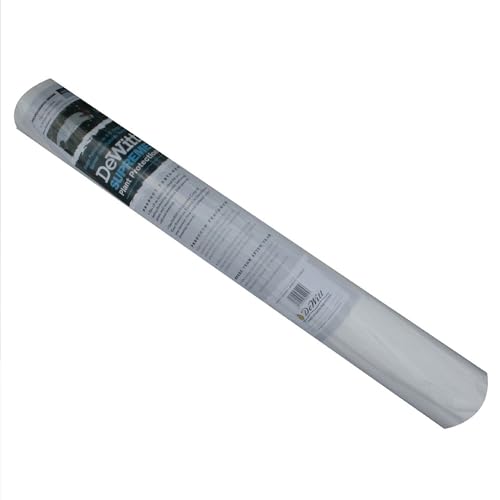
White druplet disorder, which turns a portion of the berries a lighter color (white or pink), is caused by a sudden change in UV radiation during hot, dry weather. The fruit is still edible, just not as attractive. You can prevent the bleaching of future berries by using row covers on hot, dry days.
Pro Tip: If you grab insect netting with a small grid, it can typically double as shade protection.
Frost Injury
If you’re expecting a late freeze when your plants are already flowering in the spring, use frost cloth or row covers to protect your plants. Flowers suffer damage at 30°F, which affects your harvest.
Are blackberries easy to grow?
How long does it take for a blackberry bush to fruit?
Can I grow blackberries from a blackberry?
You’ll get a much tastier (and faster) harvest if you start with a plant created through propagation or tip-layering.
What should not be planted near blackberries?